‘No one knows, how far I’ll go’… – Moana.
The words of Moana, the first Disney Pacific Islander princess about her yearning for the sea. This film released in 2016, gives so much insight into the sea and the Polynesian cultures surrounding the sea.
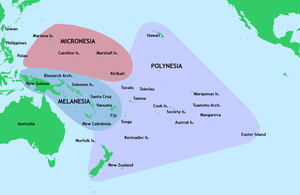
The following image is a map of Polynesia, a region of island in the Southern Pacific Ocean. Due to their location Polynesians rely on the sea and many of their are stories about the sea.
The story that was chosen for Moana was the story of Maui, the demi-God. The Polynesian islands interestingly have unique story telling whereby it is mainly of humans who gain God-like powers. He is not attributed to just one country, but several of them. They are mostly similar with Maui being able to creating fire and raising the sky. Therefore he is seen as a to gift to man-kind. However what is interesting is that it did get some backlash, mostly due to the film version Maui’s weight (as seen in below picture). It could argued that he is portraying more of a stereotype of Polynesia in which many are associated with being overweight such in Nauru). These representations are likely not to be true but as the sea is so vast, these are the representations that were portrayed to the West.
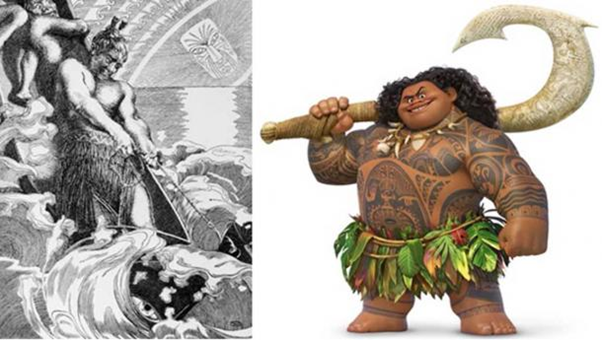
This idea seems also familiar, Disney making a film about a non-Western culture. It can be linked to ideas brought in by Said, Orientalism. I suggest the film somewhat portrays an Orientalism of the sea and sea islands. This culture is othered, is made exotic. Even though this film what somewhat accurate to actual legends and myths in this region, it still a Western outsider’s view of it.
However, Disney was very aware of these claims of Orientalism and appeared to respond to this by actually going to Pacific Islands (Tahiti and Somoa) and learning about the culture. This can show the change in academia as well as in public view. Cultural appropriation is very prominent in the minds of filmmakers, as well as in the minds of the people. It was also the first Disney film in Tahitian, as it is a dying language. Therefore sea cultures are not completely contested, there are instances of people working together.
However, these stories do evident a key trope within sea studies, that there are different understandings of the sea by different cultures and one cannot assume that the island views are homogeneous. The Polynesian stories viewed the sea as central to life while the Western view has seen them as secondary to life (thought his has changed recently). This could be explained because the islands are so close to the sea and rely on them while in West often they are invisible.
I will end this blog post, from Moana herself explaining her yearning for sea and my yearning to learn about the sea:

 Slowly drifting...1911729